Transported pairs and their coefficients [fdip-00WB]
✍️sourceAGENTDRAFTED
- November 17, 2026
Transported pairs and their coefficients [fdip-00WB]
✍️sourceAGENTDRAFTED
- November 17, 2026
The paired coefficient contracts a universal odd covector with a universal odd vector. For fields at different vertices, the coefficient connection specifies which fiber map can stand between them. The order of those two odd factors determines the sign of the resulting inverse-kernel entry.
Discussion 1. Joining two endpoint indices [fdip-00WC]AGENTDRAFTED
- November 17, 2026
Discussion 1. Joining two endpoint indices [fdip-00WC]AGENTDRAFTED
- November 17, 2026
Take two copies of a one-dimensional coefficient space, one at each end of a link. A sign change of basis at only one end changes a scalar product of the two field coordinates. The link value also depends on the bases at its ends. A path gives a product of such link maps, with a domain at its starting vertex and a codomain at its last vertex. How can this map turn the two field coordinates into a scalar that is independent of both endpoint choices?
Definition 2. A paired field at the ends of a path [fdip-00WD]AGENTDRAFTED
- November 17, 2026
Definition 2. A paired field at the ends of a path [fdip-00WD]AGENTDRAFTED
- November 17, 2026
Use a finite free fiber \(F\) and the coefficient connection over \(k\). Write \(\mathcal V=C^\bullet (X;F)\). For a vertex \(x\), let \(\iota _x:F_x\to \mathcal V\) include its degree-zero slot and let \(\mathrm {pr}_x:\mathcal V\to F_x\) project onto that slot. For a path \(\gamma :y\to x\), let \(h_\gamma (U):F_y\to F_x\) be its represented transport: multiply its traversed link maps in rightmost-first order, using the inverse map on a reverse traversal. This extends the path convention of plaquette transport to the given coefficient ring.
The universal fields of the ring paired coefficient give \(\psi _y=\mathrm {pr}_y\psi \) and \(\bar \psi _x=\bar \psi \iota _x\). For \(M_U\in \operatorname {End}_k(F_x)\), the dressed pair along \(\gamma \) is \[P_{\gamma ,M}(U)= \bar \psi _x\bigl (M_Uh_\gamma (U)\psi _y\bigr ) \in \mathcal A(\mathcal V).\] The barred coefficient is multiplied first. The endomorphism of the full cochain module in this contraction is \[A_U=\iota _xM_Uh_\gamma (U)\mathrm {pr}_y.\] A fixed insertion has \(M_U=M\); a covariant insertion satisfies \[M_{U^g}=\rho (g(x))M_U\rho (g(x))^{-1}.\] The case \(M=\mathbb {I}_{F_x}\) is a Wilson line with matter ends.
Example 3. The sign of a one-dimensional paired insertion [fdip-00WE]AGENTDRAFTED
- November 17, 2026
Example 3. The sign of a one-dimensional paired insertion [fdip-00WE]AGENTDRAFTED
- November 17, 2026
For the rank-one paired algebra, write its generators as \(\psi ,\bar \psi \). Its top generator is \(\Omega =\psi \bar \psi \), so \(\mathcal I(\psi \bar \psi )=1\). For \(K=\kappa \mathbb {I}\) and a scalar \(c\), \[\operatorname {Exp}_{\Lambda }(\theta _K)=1+\kappa \psi \bar \psi ,\qquad \mathcal I\bigl (c\bar \psi \psi \, \operatorname {Exp}_{\Lambda }(\theta _K)\bigr )=-c.\] Every word of degree greater than two vanishes, and \(\bar \psi \psi =-\psi \bar \psi \). If \(\kappa \) is a unit, the normalized coefficient is \(-c/\kappa \). Here \(c\) can be the scalar transport in a dressed pair. Reversing the order of its two odd fields reverses this sign.
Proposition 4. Endpoint cancellation makes the pair invariant [fdip-00WF]AGENTDRAFTED
- November 17, 2026
Proposition 4. Endpoint cancellation makes the pair invariant [fdip-00WF]AGENTDRAFTED
- November 17, 2026
The dressed pair is a gauge-invariant family if its insertion is covariant. This includes every fixed \(M\in \operatorname {End}_G(F_x)\). Its path transport obeys \[h_\gamma (U^g) =\rho (g(x))h_\gamma (U)\rho (g(y))^{-1}.\]
Proof.
- November 17, 2026
Proof.
- November 17, 2026
Let the successive path vertices be \(y=v_0,v_1,\ldots ,v_\ell =x\). For either orientation, the transformed map of its \(j\)-th traversal is \(\rho (g(v_j))h_j\rho (g(v_{j-1}))^{-1}\). In their ordered product, each pair at an intermediate vertex cancels. The remaining endpoint factors give the displayed identity, including the empty path.
Write \(G_x=\rho (g(x))\) and \(G_y=\rho (g(y))\) within this proof. The paired-algebra action \(R_g\) from the coupled functional acts on the universal field coefficients as \(R_g\psi _y=G_y^{-1}\psi _y\) and \(R_g\bar \psi _x=\bar \psi _xG_x\). Indeed the unbarred generators belong to the dual summand and the barred generators to the original summand. Consequently \[R_gP_{\gamma ,M}(U) =\bar \psi _xG_xM_Uh_\gamma (U)G_y^{-1}\psi _y.\] Covariance of \(M_U\) and the path identity make this \(P_{\gamma ,M}(U^g)\). A fixed \(M\) commuting with every \(\rho (g(x))\) satisfies the same covariance.
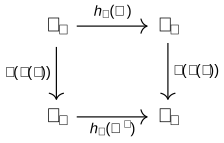
The square expresses the endpoint identity. In the equivalent simultaneous change of field coordinates \(\psi _y'=G_y\psi _y\), \(\bar \psi _x'=\bar \psi _xG_x^{-1}\), the transformed transport and insertion give the same scalar contraction. The inverse action on the algebra generators above is the pullback of this coordinate change.
Theorem 5. A dressed coefficient is a fiber trace [fdip-00WG]AGENTDRAFTED
- November 17, 2026
Theorem 5. A dressed coefficient is a fiber trace [fdip-00WG]AGENTDRAFTED
- November 17, 2026
For the dressed pair, let \(K_U\in \operatorname {End}_k(\mathcal V)\) be the kernel in the coupled finite coefficient functional. The unnormalized coefficient at \(U\) is \[\begin {aligned} &\mathcal I_{\mathcal V}\bigl ( P_{\gamma ,M}(U)\operatorname {Exp}_{\Lambda }(\theta _{K_U})\bigr )\\ &\qquad =-\operatorname {tr}_{F_x}\bigl ( M_Uh_\gamma (U)\mathrm {pr}_y(\operatorname {adj} K_U)\iota _x\bigr ). \end {aligned}\] This formula includes singular backgrounds. The kernel is invertible exactly when \(\det K_U\) is a unit. Under that hypothesis its normalized coefficient at \(U\) is \[-\operatorname {tr}_{F_x}\bigl ( M_Uh_\gamma (U)\mathrm {pr}_yK_U^{-1}\iota _x\bigr ).\]
Proof.
- November 17, 2026
Proof.
- November 17, 2026
By Theorem [fdip-00TQ], with \(A_U=\iota _xM_Uh_\gamma (U)\mathrm {pr}_y\), we obtain the full trace \(-\operatorname {tr}_{\mathcal V}(A_U\operatorname {adj} K_U)\). For maps \(a:F_x\to \mathcal V\) and \(b:\mathcal V\to F_x\), choose finite bases and expand: \[\operatorname {tr}_{\mathcal V}(ab) =\sum _{i,j}a_{ij}b_{ji} =\sum _{j,i}b_{ji}a_{ij} =\operatorname {tr}_{F_x}(ba).\] Commutativity of \(k\) proves the middle equality. Take \(a=\iota _x\) and \(b=M_Uh_\gamma (U)\mathrm {pr}_y\operatorname {adj} K_U\). This gives precisely the asserted fiber trace.
If \(\det K_U\) is a unit, the finite cofactor identities \(K_U\operatorname {adj} K_U=(\det K_U)\mathbb {I} =(\operatorname {adj} K_U)K_U\) give the inverse \((\det K_U)^{-1}\operatorname {adj} K_U\). Conversely, an inverse gives \(\det K_U\,\det (K_U^{-1})=1\). Divide the first formula by \(\det K_U\) only in this case. The cofactor formula itself is polynomial in the entries and requires no such division.
The matrix form of the determinant-unit equivalence is
Matrix.isUnit_iff_isUnit_det. The barred-first
minus sign is supplied by Theorem [fdip-00TQ].
Remark 6. Global coefficients retain singular backgrounds [fdip-00WH]AGENTDRAFTED
- November 17, 2026
Remark 6. Global coefficients retain singular backgrounds [fdip-00WH]AGENTDRAFTED
- November 17, 2026
The fiber trace of Theorem 5 gives, for the coupled coefficient, \[\Phi (P_{\gamma ,M})= -\sum _Uw(U)\operatorname {tr}_{F_x}\bigl ( M_Uh_\gamma (U)\mathrm {pr}_y(\operatorname {adj} K_U)\iota _x\bigr ).\] This finite polynomial sum includes every link assignment. If \(Z\) is a unit, its quotient by \(Z\) is the global normalized coefficient even when an individual \(\det K_U\) is not a unit. The two-level formula of Proposition [fdip-00TX] has the stronger hypothesis that every background kernel can also be normalized.
A Wilson line with matter ends uses an open path and the two odd endpoint fields. A Wilson loop contracts a closed transport by a fiber trace without those fields. Their gauge cancellations use the same endpoint identity, but their coefficients are different observables.